
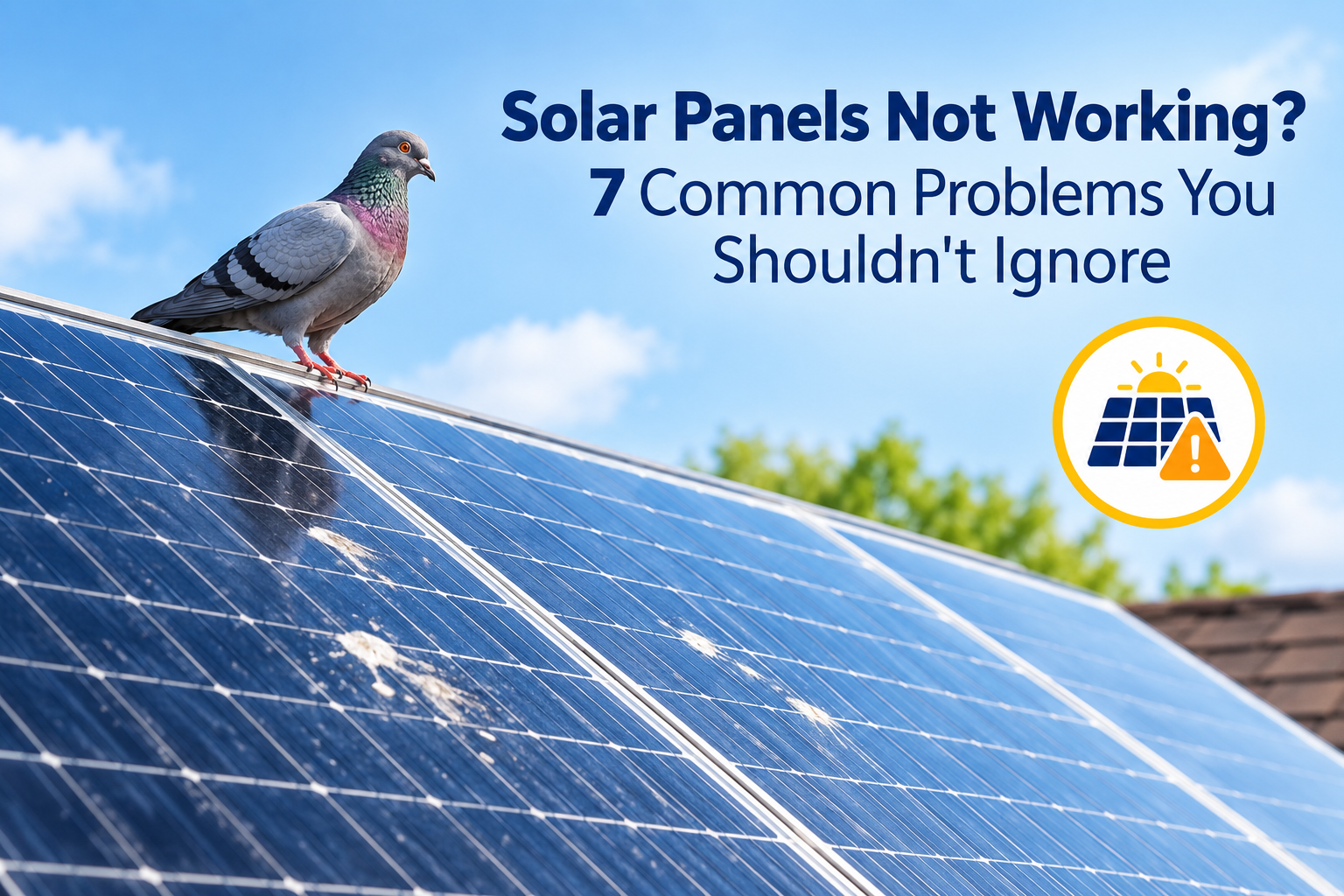
Solar Panels Not Working? 7 Common Problems You Shouldn’t Ignore
Your electricity bill crept back up this month. The app still says the system is fine, which is the part that nags at you. You paid real money for that thing, and it should be paying you back.
Solar panels not working is rarely a dramatic event. Nobody wakes up to smoke or sparks. More often it’s a slow bleed you only catch by watching the numbers.
Seven faults cause most of this. Here’s how to spot each one, what it costs you, and when to stop guessing. Most people ignore them until a repair bill forces the issue.
1. Shade Creeps In Over Time
Trees grow continuously, and new structures like satellite dishes or chimneys create unexpected shadows. In traditional string inverter systems, shade on a single module reduces the output of the entire string, though systems equipped with microinverters or DC optimisers isolate this power loss.
Track changing shade patterns safely from the ground or via your monitoring app across seasons, as lower winter sun angles cast significantly longer shadows.
Because shaded panels still generate partial power, gradual losses often blend into normal weather fluctuations until you review historical production data.
2. Dirty Glass (Soiling)
Dust, pollen, highway grime, and bird droppings build a film you cannot see from the garden. Output is usually the only honest signal.
Losses land unevenly, too. Panels under a chimney plume or beside a leafy tree soil far faster than the tidy ones two rows away.
Rain alone won’t cut it. Sticky droppings and baked-on dust need a gentle brush and deionised water, not a pressure washer.
Watch your monthly totals. A slow, steady slide across several sunny weeks usually points to soiling rather than failing hardware.
3. A Failing Inverter
The inverter turns DC power from the roof into electricity your house can actually use. When it dies, production does not fade. It stops dead.
Most units are rated for 10 to 15 years, though heat and dust push plenty of them to quit early. Panels often outlive two inverters.
A gentle hum is normal. Clunking, a blank display, or shutdowns every afternoon are warnings you should not sit on.
Find the warranty card now, before you need it. Many failures are covered, but you’ll need proof of the install date and the original receipt.
4. Cable and Connector Damage
Rooftop wiring survives blistering afternoons and freezing nights. That constant swing loosens connectors and hardens insulation year after year.
A loose MC4 plug can arc. Small arcs scar the metal, and scarred contacts raise resistance until the string underneath stops keeping up.
Water is the quieter killer. A failed seal lets moisture wick inside, rusting terminals for months before anything shows up on a meter.
Loose joints rarely announce themselves either. They sit quietly for years, warming a little more each summer, until a connector finally gives out and the string goes dark.
5. Nests, Droppings, and Wildlife
Pigeons treat the gap under a panel as a ready-made nest site: warm, dry, and safe from hawks. Squirrels use that same gap as a highway.
The mess does the damage. Droppings are acidic and pit the aluminium frame, while packed nesting material traps heat against the glass.
Rodents also gnaw. Chewed insulation leaves bare copper exposed to rain, and one shorted run can knock an entire array offline.
Mesh barriers beat every other fix here. Spikes, gels, and traps don’t stop determined birds. A stainless screen across the gap does.
6. Micro-Cracks and Hot Spots
Hail the size of peas, a dropped tool, or a roofer stepping between rails can leave hairline fractures invisible from the ground.
Those cracks become hot spots. One overheating cell raises resistance and drags down the whole panel’s output, not merely its own.
Hot spots also cook the backsheet. Left alone long enough, they pit the glass and burn a pinhole through the panel’s rear layer.
Many cracks stay harmless for years, though. Trouble starts once temperature swings widen one until the cell behind it quits.
7. Bad Data From Your Monitoring
Sometimes solar panels not working isn’t a hardware fault at all. The dashboard froze, the router dropped, or an update erased history.
Don’t trust one live figure. Download the portal’s raw data by month and look for a trend rather than a single reading.
Set alerts to your phone. A slow leak in output is far easier to forgive when it reaches you early.
Systems also report on different schedules. A two-hour lag between the portal and reality can look like a failure when nothing is wrong.
Habits That Catch Trouble Early
None of this is glamorous, but a few minutes each season keeps small faults from turning into expensive ones.
- Photograph every panel label and serial number while the system is still new
- Keep warranties, installer contacts, and service dates in a single folder
- Trim trees in late winter, when bare branches are easiest to judge
- Ask which panels share a string so an outage never catches you cold
- Compare this year’s production total against last year’s every January
- Sweep leaves and needles off the roof edge before the rainy season
- Tape the inverter’s model number somewhere you’ll find it in a hurry
- Note the date of every service visit, including who did the work
When to Call a Pro Instead of Climbing Up
Some jobs are worth the call, and a few of these shouldn’t wait around for a convenient weekend.
- Smoke or a burning plastic smell near the inverter
- The same error code showing up three mornings straight
- Cracked glass, loose frames, or panels sagging off their rails
- Output sitting more than 10 per cent under your usual baseline
- Water stains on the ceiling directly beneath the array
- Breakers that trip during the sunniest hours of the day
- Any repair quote that never explains what actually failed
- A panel reading zero while its neighbours look perfectly normal
Where PPSP Ltd Fits In
At PPSP Ltd, we’ve spent years on rooftops chasing down every fault above, the ones an app can’t name, and the eye can’t see.
Our crews handle inspections, deep cleans, wildlife-proofing, and electrical repairs in one visit, with a written quote before work starts.
If your problem turns out to be wildlife, wiring, or weather, we treat the cause instead of the symptom. That saves you a repeat visit later.
When the array simply needs a wash, that’s exactly what we’ll tell you. No invented problems, no pressure, and no replacing gear with good years left.
Conclusion
Solar arrays rarely fail in one bad afternoon. They complain first, with softer numbers, odd noises, dirty glass, and new tenants. Catching those warnings early prevents common solar panel problems from turning into full-system shutdowns.
A cleaning bill stings less than a replacement inverter, and a new inverter stings far less than a house fire. Your production history is your best early warning system—ten minutes spent checking performance logs beats ten months of guessing.
Book an inspection, get a straight answer, and then ignore the system for months. That’s the real promise of going solar, and it only holds up while the hardware stays healthy.
FAQ
How do I know whether a drop in output is serious?
Start with evidence, not guesswork. PPSP Ltd suggests comparing your last three months with the same months a year earlier. Small dips after cloudy stretches are weather. Sudden shutdowns, or weeks that never recover, mean a real solar panels not working problem worth inspecting quickly.
Why does output fall on the hottest days?
Heat. Solar cells lose efficiency as they warm, and production starts sliding once temperatures pass roughly 25 degrees Celsius. Trapped air behind the panels makes it worse because warmth has nowhere to escape. Good airflow and clean glass both help.
Can I pressure-wash my panels?
No. High pressure forces water past frame seals, strips anti-reflective coatings, and shatters glass. Spraying cold tap water on hot panels also causes thermal shock cracks. Instead, rinse panels early morning using a low-pressure hose. For stubborn dirt, use deionised water and a soft brush, or hire a professional.
Does one cracked panel mean replacing everything?
Not usually. A single damaged panel can often be swapped, provided the replacement matches the original’s voltage and current closely. Mismatched units drag down whatever string they join. If that model is discontinued, installers pair something electrically compatible instead of rebuilding the array.
What happens during a professional inspection?
Expect thermal imaging to locate hot spots, plus voltage and current readings at every string. Inspectors check connectors, mounts, and grounding, then review inverter logs and roof condition. You finish with a written report usable for insurance or warranty claims.
<- Back to blog