
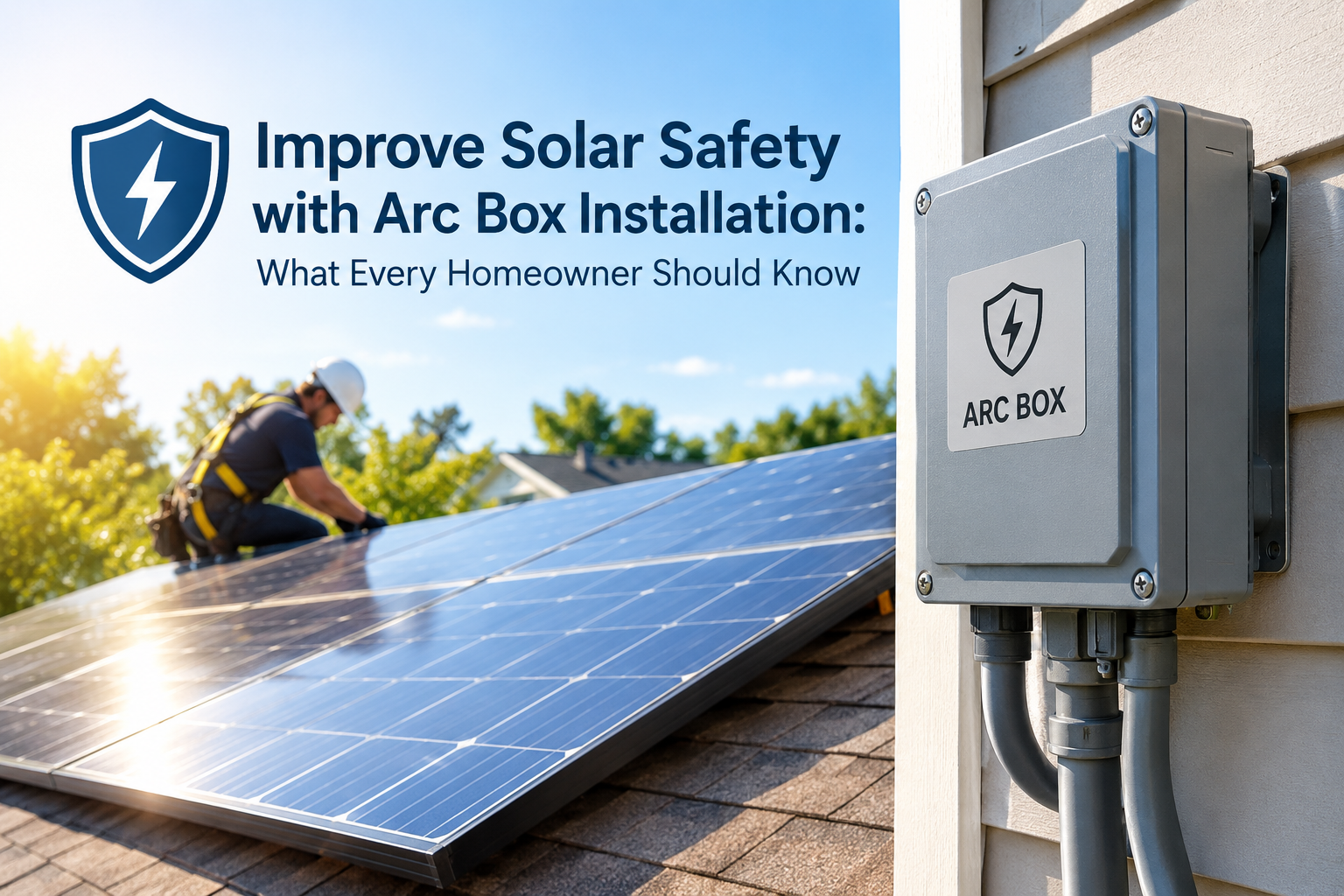
Improve Solar Safety with Arc Box Installation: What Every Homeowner Should Know
When your solar array goes up, everyone focuses entirely on the shiny panels and immediate electric bill savings. No one ever sits down to discuss the actual mechanical hardware wiring everything together under those modules.
The harsh reality is that your roof functions as a high-voltage power plant exposed to freezing ice and boiling heat. Over time, basic weather wear on exposed connections introduces serious structural vulnerabilities.
Getting a proactive Arc Box Installation sorted out is the easiest way to isolate these risks before they ever spark. This physical barrier stops small electrical failures from turning into catastrophic household emergencies.
Understanding the Hidden Risk on Your Roof
Every residential solar array uses multiple heavy-duty cables joined together by small plastic plugs called DC connectors. Over the years, intense UV rays, freezing winter frost, and heavy rain cause these plastic components to slowly degrade.
If moisture leaks inside a compromised connector, the high-voltage electricity can jump across the open gap. This jumping current creates an intense electrical arc that burns at thousands of degrees, easily melting through nearby roofing materials.
What Exactly is an Arc Box?
An Arc Box is a specialised protective enclosure manufactured from premium, high-temperature refractory materials. Technicians snap these rugged casings directly over the existing cable connections to seal them away from the elements completely.
- High-temperature internal lining actively smothers sparks and contains heat.
- Heavy-duty outer shell blocks external moisture from reaching live wires.
- Universal sizing smoothly accommodates almost all major solar connector brands.
- Built-in drainage channels prevent standing rainwater from pooling inside the unit.
- Secure locking mechanisms keep the entire enclosure tightly sealed for decades.
If a dangerous electrical fault occurs inside one of these units, the thermal energy is entirely contained. The specialised wrapper prevents intense heat from ever reaching your dry wood roof rafters or roofing felt.
Why Early Prevention Matters for Your Household
Waiting for an actual electrical failure to happen before taking action is a massive financial gamble. Repairing structural fire damage or replacing a ruined solar array costs significantly more than a proactive safety upgrade.
Furthermore, many modern home insurance providers are looking more closely at how well residential solar installations are actively maintained. Taking early precautions gives you total peace of mind and keeps your property fully compliant with current safety expectations.
How External Debris Multiplies the Hidden Hazard
Your roof space naturally accumulates dried leaves, twigs, pine needles, and stray pest nesting materials over time. When these flammable bits get trapped tightly beneath your panels, they create a dangerous tinderbox right next to your electrical junctions.
A single rogue spark from a strained connector can instantly ignite a pile of dry organic debris. Enclosing the connectors prevents stray sparks from ever escaping, completely neutralising the danger posed by stubborn moss and nesting birds.
Addressing Common Human Errors from Day One
A surprising number of solar system faults actually originate right from the very first day of setup. Simple oversights during the initial build can slowly degrade the long-term electrical stability of your array over several years.
- Combining mismatched connector brands creates microscopic gaps in the seals.
- Weak or rushed wire crimping leaves loose, unstable electrical connections.
- Joining components during rainy weather traps moisture inside the plastic plug.
- Forgetting to click locking mechanisms leaves plugs vulnerable to shifting.
- Forcing misaligned pins permanently damages internal metal electrical contacts.
Because these craftsmanship mistakes are completely invisible from the ground, adding physical containment is the ultimate backup plan. It acts as an affordable insurance policy against hidden installation flaws buried deep within your array.
Thermal Management Under the Blazing Sun
You might wonder if sealing a high-voltage connector inside a dense plastic enclosure causes the component to overheat. Thankfully, the engineering behind the containment unit takes extreme seasonal temperatures into full account.
Independent university laboratory testing proves that these enclosures maintain excellent internal airflow around the plugs. The built-in ventilation pathways actively shed ambient heat, allowing the connectors to operate well within their original manufacturer temperature limits.
Safeguarding Your Long-Term Property Value
A home with an unmaintained or unprotected solar array can quickly become a headache during detailed home inspections. Future buyers and mortgage lenders are increasingly looking for explicit proof of robust electrical safety compliance.
Documenting your proactive safety upgrades shows potential buyers that your green energy system has been meticulously maintained. It transforms your solar array into a verified, risk-free asset rather than a vague compliance question mark.
How the Setup Process Works
The physical installation process is incredibly quick and causes zero disruption to your daily household routine. Technicians simply open the protective casing, place the connected cables inside the rubber seals, and snap the two halves shut securely.
At PPSP Ltd, we ensure these enclosures are never left dangling loosely from your solar cables. Our team secures every single unit to the metal racking or roof timbers using heavy-duty, purpose-made mounting brackets.
Proper mounting ensures the heavy enclosures stay high and dry beneath the panels. This configuration allows the built-in drainage ports to shed rainwater naturally without letting moisture collect around the sensitive electrical joints.
Choosing the Right Team for the Job
Working on a roof involves handling high-voltage DC electricity, which means it is definitely not a weekend DIY project. You need experienced professionals who know exactly how to handle live solar arrays safely without disrupting your power generation.
We at PPSP Ltd handle the entire process from start to finish, checking your existing connectors for wear before fitting the protection. Our crews carry specialised brackets to suit both standard railed systems and modern roof-integrated solar tiles.
Final Thoughts
Upgrading your home security does not have to be a massive ordeal. Investing in a professional Arc Box Installation is the smartest way to bulletproof your roof against unpredictable electrical faults. Adding an Arc Box to your system mitigates hidden installation flaws and weather wear.
It secures your solar investment, keeping your family safe and your property value intact. Reach out to our expert team today. Let us protect your property for the long haul.
Frequently Asked Questions
How does PPSP Ltd handle an Arc Box Installation on an older solar array?
Our experienced technicians first inspect your existing setup for any hidden weather damage or loose wiring. PPSP Ltd then securely fits the Arc Box enclosure over each individual DC connector, ensuring the entire system meets modern safety standards without disrupting your current power supply.
Can an Arc Box be installed on any type of roof racking?
Yes, these safety enclosures are highly versatile. Specially designed mounting brackets allow them to clip firmly onto standard flat-roof aluminium rails, sloping roof racking systems, or even directly onto timber battens beneath modern, roof-integrated solar tiles.
Will this safety upgrade affect my solar panel warranty or electricity generation?
Not at all. The protective casings simply wrap around the outside of your existing cable connectors without altering the wiring itself. Your system continues generating green electricity exactly as before, while your manufacturer warranty remains completely valid and unaffected.
How long do these protective roof enclosures actually last in harsh weather?
They are manufactured from premium, UV-stabilised materials designed to match the lifespan of your solar panels. The rugged outer shell and specialised internal lining easily withstand intense summer heat, freezing winter frost, and heavy rain for over twenty-five years.
Do I need to turn off my solar power system during the fitting process?
The installation process is incredibly fast and non-invasive. While our team works safely around the live DC cables, the system typically requires only a brief, temporary shutdown to ensure total safety while matching brackets are secured to the roof structure.
<- Back to blog