
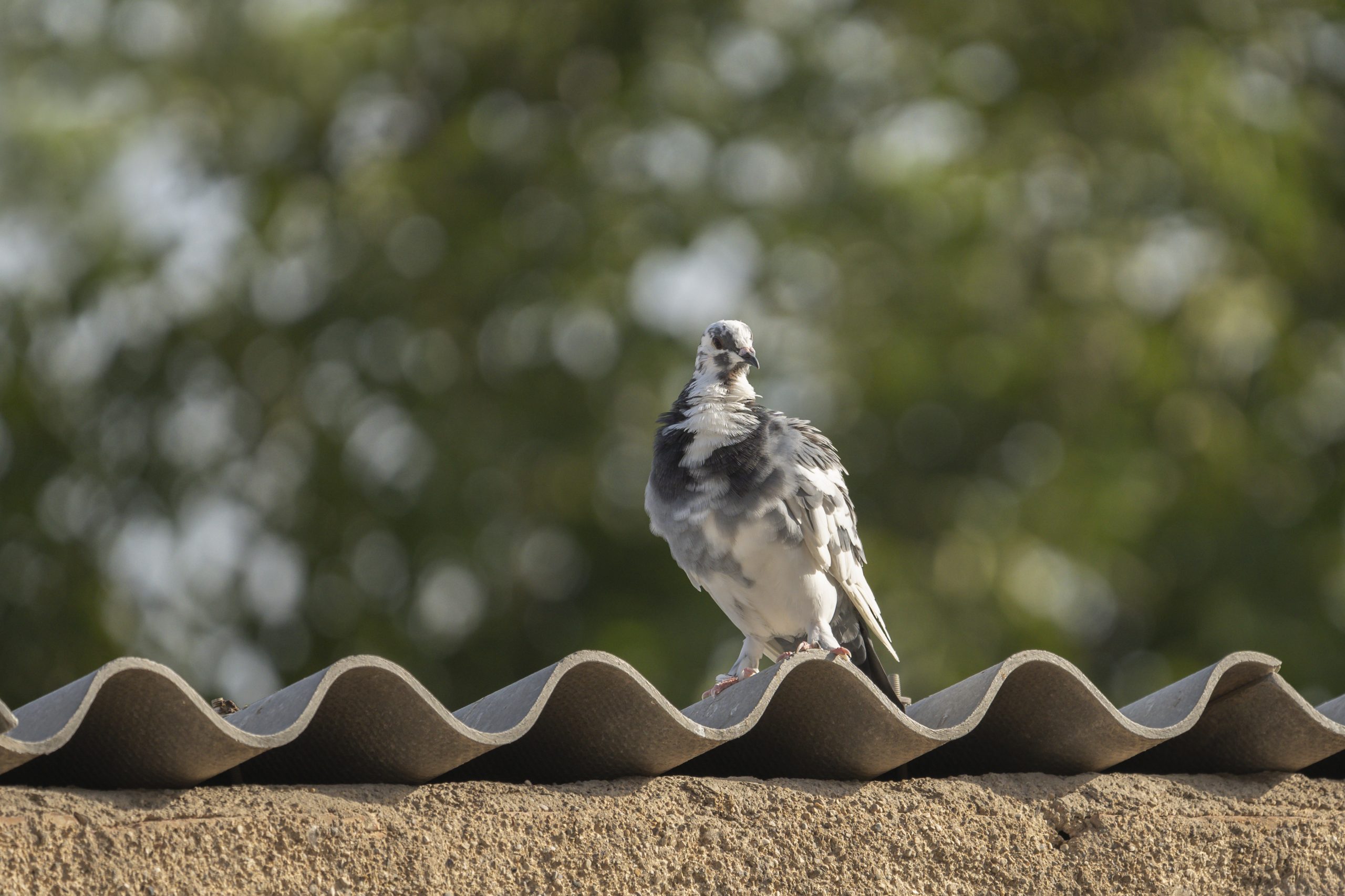
How Do You Stop Birds Nesting with a Pigeon Deterrent for Solar Panels?
You do not usually spot the problem straight away. What catches your attention initially is the noise. Scratch marks during the morning hours, flapping wings over the ceiling, and pigeons flying onto the roof more frequently than before. But at some point, you raise your head to see they are no longer just passing by.
Solar panels give pigeons exactly what they want. The crevice beneath serves as an area that is protected from rainfall and gusts and is cosy enough for the pigeons to consider it a haven. Once they realise this, they will continue returning due to the comfort it offers.
That is why a proper pigeon deterrent for solar panels matters early. If birds get comfortable under there, they do not leave because the weather changes or because the roof gets noisy. They stay until access is removed.
The frustrating part is how quickly a small bird issue turns bigger. At first, it feels like background noise. A week later, you notice feathers near the gutter. A bit later, twigs start appearing below the roofline. Then you see the mess building up around the property and realise the birds are properly nesting.
What happens when nesting is left too long
Once pigeons settle under panels, they do more than make noise. They build extensively. Piles of twigs, grass, feathers, and other garbage begin accumulating beneath until the entire area turns into a nest bed.
Afterwards, the bird droppings start increasing, which is where humans usually become aware that things have progressed beyond expectations.
You often end up seeing:
- Droppings running down the roof tiles after rain
- Gutters are filling faster with dirt and nesting debris
- Feathers caught around panel edges
- Smells near windows or roof vents
- More birds gather because one pair has already settled
The longer it stays untouched, the harder the clean-up becomes. Droppings dry onto surfaces, debris traps moisture, and the whole area underneath the panels becomes unpleasant to deal with.
That is why proper bird protection for solar panels should happen before the nesting fully builds season after season.
Why simple deterrents rarely solve it properly
Most people try quick fixes first because they want the birds gone without turning it into a bigger job. Reflective strips, fake owls, spinning objects, noise gadgets, anything that claims to scare pigeons off.
The issue is that pigeons learn quickly. If they still have access underneath the panels, they usually ignore the deterrent after a few days and go straight back.
Visual tricks often disappoint people. They may slow birds down for a short time, but they do not stop nesting if the entry point stays open.
A proper deterrent works when birds physically cannot reach the sheltered space underneath. That is what changes the situation long term.
Why Solar panel bird mesh works better than anything else
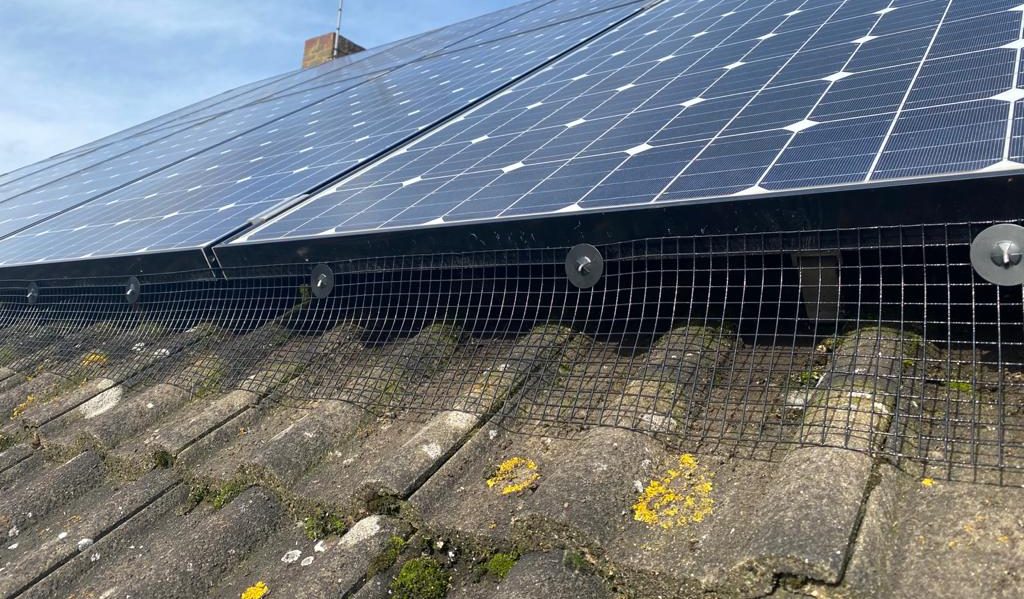
The most reliable answer for most homes is Solar panel bird mesh because it closes the gap pigeons use without affecting the solar system itself.
The mesh fits around the outer edge of the panel array and acts as a barrier. Birds cannot push through it, but airflow still passes underneath, which matters because solar panels need ventilation to perform properly.
Good mesh does not just stop birds today. It keeps the same problem from returning next season.
What makes the difference is proper fitting. If one corner sits loose or one side is left exposed, pigeons find it fast. They test weak points constantly.
Rushed fitting usually creates repeat problems later.
Why does cleaning have to happen before protection goes on
A lot of people think mesh can simply go on while old nests stay trapped underneath. It sounds easier, but it usually causes problems later.
Old nesting material holds moisture, keeps smells trapped, and still attracts birds because traces of previous nesting remain.
Before protection is fitted, the area underneath needs to be cleared properly:
- Remove twigs and compacted nest material
- Clear feathers trapped around brackets
- Clean heavy droppings from tiles and panel edges
- Check gutters for blockages caused by debris
This part is worse than people expect, especially if birds have been there for months.
That is why homeowners often call PPSP Ltd once they realise the mess underneath is not something they want to handle on a ladder.
Can a Solar bird repeller help as well?
A Solar bird repeller can help reduce activity around the roof, but it works best as support rather than the main fix.
Repellers usually rely on reflected light, movement, or sound to make birds less comfortable landing nearby. That can help when birds are only starting to gather, but if pigeons already know they can get underneath the panels, they often tolerate the disturbance.
They are stubborn when they have already chosen a nesting spot.
Repellers work better once access has already been blocked rather than instead of blocking it.
Is bird netting better than mesh?
Some homeowners ask whether bird netting for pigeons is worth using instead of mesh.
Netting can work well on larger roof sections or awkward spaces where birds gather in open areas. For standard solar panels, though, mesh usually gives a neater and longer-lasting result.
Netting can loosen over time if not tensioned correctly. Mesh tends to stay firm, sit close to the panels, and remain less visible from ground level.
For most homes, that cleaner finish matters because you want protection without making the roof look untidy.
Why acting early saves hassle later
The longer pigeons stay under solar panels, the more work usually follows. More mess, more droppings, more cleaning, and more chance that birds return again next season.
Protecting solar panels from pigeons early almost always makes the job simpler.
PPSP Ltd deals with roofs like this every day, and the reason proper proofing works is straightforward. Once birds lose access, they stop treating the panels like home.
FAQs
Is bird proofing solar panels legal in the UK?
Yes, it’s completely legal, although there is one thing that people might not always realise. You can’t just go and rip everything off when there are birds nesting there. In the UK, there are laws that protect birds’ active nests and prevent people from disturbing them, particularly during their breeding season, which means that the timing is important. It is imperative to look first at the roof before trying anything else, since we don’t want to create yet another problem.
Will bird proofing affect the efficiency of my solar system?
Not if it is done properly. Bird proofing does not mean blocking any air vents. What happens here is that the mesh is fitted around the edges of the panels, creating room under the mesh itself. That’s exactly what should be done for the system to work properly, which is why, in many cases, it’s better to clean the area first.
How do I know if I already have a bird infestation?
Usually, the roof tells you before you ever see under the panels. You hear scratching early in the morning, birds keep landing in the same spot, feathers show up near the gutters, and droppings start appearing around the house more often than they should. If that keeps happening day after day, there is a good chance they are already settled underneath.
How long does bird proofing last?
If it is fitted properly, it should last for years without becoming a constant maintenance job. Strong mesh fixed securely around the panels holds up through wind, rain, and seasonal changes. The main thing is getting it installed properly from the start, because once weak spots appear, birds are quick to test them.
<- Back to blog