
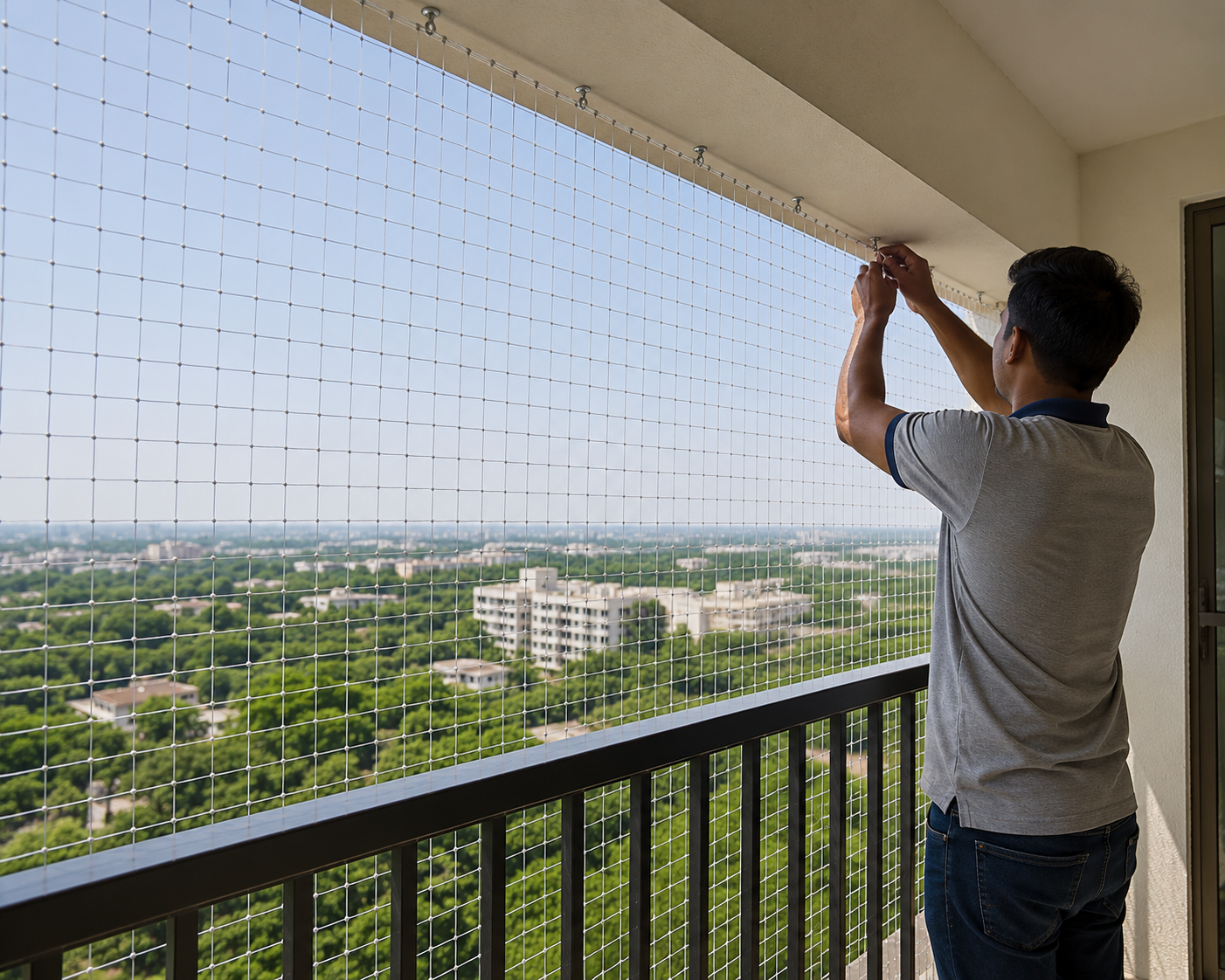
Common Mistakes to Avoid During Pigeon Netting Installation
Most pigeon problems don’t appear overnight. They build up bit by bit until a balcony, rooftop, or solar panel system becomes something that needs dealing with.
A lot of pigeon netting installation mistakes start with good intentions. Someone measures up, gets the materials, puts the net in place, and figures the job is sorted.
Then something gets overlooked. It might be a loose corner, a small gap, or a section that wasn’t secured properly. It doesn’t seem like a big deal at the time, but that’s often where problems begin.
Assuming All Netting Is the Same
People grab whatever net is cheapest and call it a day. It needs to be understood that a balcony and a roof differ greatly, and a wind net in a different location behaves very differently, which quickly becomes evident when the wrong net is being used.
Before choosing a net, think about:
- The size of the area
- Local weather conditions
- The amount of bird activity
- Whether it’s being fitted around solar panels, balconies, or open spaces
Getting this part wrong can create problems long before the birds are gone.
Getting Measurements Wrong
Many pigeon net installation errors start before the net even comes out of the package.
People skip proper measuring more than you’d think. They just guess it or rush it.
A couple of inches off doesn’t look serious. Until pigeons walk straight through it, once that happens, you’re redoing the whole thing anyway.
Leaving Small Gaps Around Edges
It’s just another one of those simple pigeon netting mistakes that only seem so until they cause big problems for people.
Even though a net might fully cover 95% of its intended space, one tiny opening at the edge could still let birds get inside.
The annoying thing is, by the time the homeowner realizes this, pigeons may already be nesting.
Pay special attention to:
- Corners
- Pipe openings
- Roof junctions
- Balcony railings
- Areas around solar panel frames
The goal isn’t partial protection. It’s complete protection.
Installing the Net Too Loose
A loose net might not seem like a problem on installation day. A few weeks later, after the wind and weather have done their thing, it becomes obvious.
The net starts sagging and shifting out of place, and it quickly begins to look messy. In some cases, birds can push against it and create small access points that eventually turn into bigger problems.
This is one of the most common pigeon netting mistakes people make during DIY projects.
The net should be secure and properly tensioned. Not stretched to the breaking point, but not hanging like a loose curtain either. Finding that balance matters.
Forgetting About Solar Panels
Solar panels create one of the most attractive nesting spots for pigeons because they’re shaded, protected, and warm, basically the kind of place they move into without thinking twice.
When installing bird netting for solar panels, many people focus only on blocking visible access points while ignoring smaller gaps around the system.
That approach rarely works for long.
Solar panel bird proofing requires careful installation that keeps birds out while still allowing airflow and maintenance access. That’s why many property owners turn to specialists like PPSP Ltd when birds start moving underneath their panels.
Treating Balcony Installations as Easy Jobs
Balconies look simple until you actually start working on them. Then you realise they’re not.
A proper balcony pigeon net installation requires more than attaching netting across the front opening. Birds can enter from the sides, above, below, and through gaps most people never consider.
Common balcony mistakes include:
- Missing side openings
- Weak attachment points
- Loose corners
- Uneven net tension
- Using low-quality mounting hardware
The result is usually the same. The pigeons leave for a while and then eventually come back.
Using Cheap Hardware
People spend time comparing netting options and then buy the cheapest clips, hooks, and anchors available. That can be a costly mistake.
The net is only one part of the system. The hardware holding it in place matters just as much.
Low-quality components can:
- Rust quickly
- Loosen over time
- Break during strong winds
- Cause sections of netting to fail
A strong installation starts with strong materials.
Ignoring Safety
Some bird-proofing projects involve rooftops, ladders, elevated balconies, and solar panels. That’s where things can get risky.
One of the most overlooked pigeon safety net installation tips is simply knowing when a job should be handled by professionals.
Saving money isn’t worth an injury.
If the installation involves difficult access or working at height, hiring experienced installers is often the smarter choice.
Never Checking the Net Again
A lot of people put up pigeon netting and never look at it again. Then a loose clip, damaged corner, or small gap quietly shows up over time.
A quick check every few months can catch those issues early and save you a bigger headache later.
Take a quick look every few months and check for:
- Loose attachments
- Damaged netting
- Sagging sections
- Open gaps
- Signs of bird activity
A few minutes of maintenance can add years to the life of the installation.
Final Thoughts
Most bird net installation mistakes aren’t complicated. They’re usually the result of rushing, guessing, or trying to save money in the wrong places.
The good news is that they’re all avoidable.
With the right materials, careful measurements, proper installation techniques, and a little attention to detail, pigeon netting can provide long-term protection and save you from dealing with the same bird problem over and over again.
If you want the job done the first time properly, PPSP Ltd has the experience to help protect balconies, rooftops, and solar panel systems from persistent bird problems.
Stop Dealing with Pigeons Every Day
Ready for a long-term solution instead of a temporary fix?
Contact PPSP Ltd today for professional bird net installation services that keep birds out and give you your space back.
FAQs
How tight should pigeon netting be installed?
Tighter than most people think, but not stretched like a drum. If the net has too much slack, it’ll start sagging and looking untidy before long. A properly fitted net should sit neatly in place without pulling hard against every fixing point.
Can poorly installed pigeon nets damage balconies or buildings?
They can. The damage usually doesn’t come from the net itself. It’s more often caused by poor fixings, rushed drilling, or putting stress on parts of the structure that weren’t meant to support it. Getting the installation wrong can create problems that weren’t there to begin with.
How long does properly installed pigeon netting last?
A good-quality net that’s been fitted properly can last for years. Weather, sun exposure, and location all play a part, but the biggest difference often comes down to the installation. A well-fitted net generally stays in better shape than one that’s been rushed into place.
Is professional pigeon netting installation better than DIY installation?
For some small jobs, DIY can work. The trouble is that pigeons are good at finding mistakes. A missed gap or loose corner might not seem important at first, but birds usually prove otherwise. Professional installers tend to spot those issues before they become a problem.
What’s the biggest mistake people make when installing pigeon netting?
Trying to finish the job too quickly. Most installation problems come from details that get overlooked, like small gaps, loose edges, or weak attachment points. The net might look fine from the ground, but pigeons are surprisingly good at finding what people miss.
<- Back to blog