
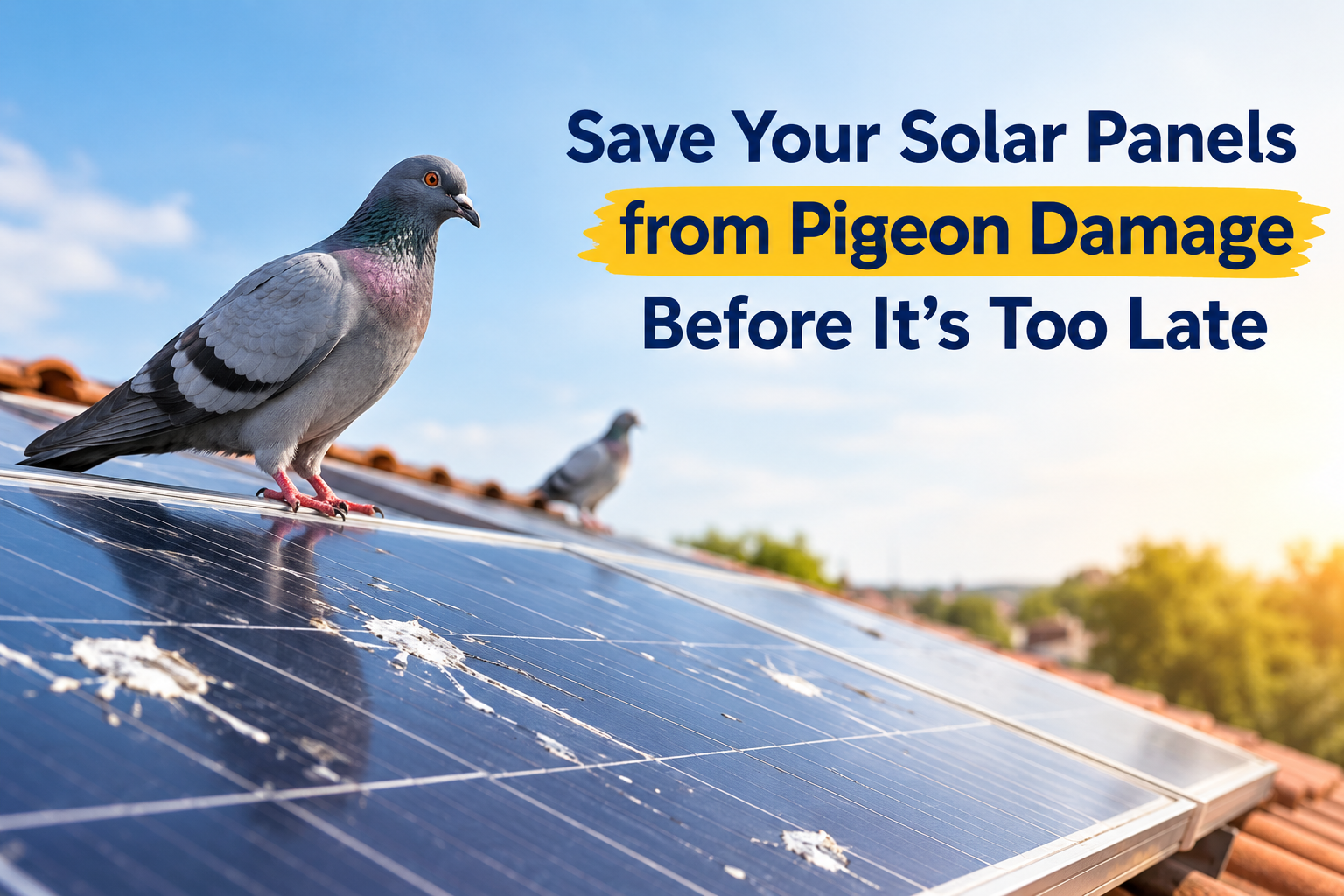
Save Your Solar Panels from Pigeon Damage Before It’s Too Late
Your solar panels are a solid investment. They look good on your roof and the energy savings are genuinely real. Then pigeons show up and ruin everything.
Once they nest under your panels, protecting solar panels from pigeons becomes urgent and genuinely expensive. Droppings eat through your connections, nesting materials block airflow, and your output drops hard. You’re facing thousands in repairs. It happens quietly at first, then the bills arrive, and you realise the damage.
The good news? It is largely preventable. The right protection keeps them out for years.
The Real Financial and Physical Cost of Pigeon Damage
Pigeon damage extends far beyond simple mess and occasional noise complaints. These birds deposit corrosive droppings that accelerate panel degradation and compromise protective coatings. The acidic nature of their waste reduces panel efficiency and significantly shortens system lifespan.
Key financial impacts of pigeon damage:
- Corrosive droppings cause coating damage and reduced energy output
- Structural damage from nesting materials and weight accumulation requires expensive repairs
- Insurance rarely covers pigeon‑related damage, leaving owners with full repair costs
- Average repair bills commonly range from £500 to £2,000 for comprehensive restoration; major failures or panel replacement can exceed £5,000
- Over a decade, accumulated damage often costs more than protecting solar panels from pigeons professionally.
Why Pigeons Find Solar Panels Attractive
Pigeons love your solar panels because they’re basically a five‑star hotel: shelter from wind and rain, warmth during cooler months, protection from ground predators – it checks every box. Plus they’ve got easy access to food: your bins, outdoor dining areas and bird feeders. Everything they need is right there.
Pigeons Nest Under Solar Panels; once they do, they tend to return year after year, breed and expand the problem.
How Pigeon Damage Develops Over Time
At first it’s just droppings scattered around. Looks annoying but not serious. Then more shows up. Nesting material – twigs, leaves, all kinds of debris. And that’s when the real damage starts.
The droppings are acidic. They eat through your panel coatings over time. Your airflow gets blocked by nesting materials, and panels can start overheating. After a few months, your energy output can drop noticeably, and you’re wondering why. Then you look underneath and realise how bad it’s gotten.
Pigeon‑Proofing Solutions That Work
Several effective approaches exist for protecting your solar investment. Bird netting for solar panels is the most widely recommended solution for long‑term exclusion. This professional method creates a physical barrier preventing birds from accessing the area beneath panels while maintaining system functionality.
Why netting is favoured:
- Physical exclusion is highly effective when properly installed (rather than relying solely on deterrents)
- Quality materials withstand UV exposure and weather without rapid degradation
- Solar panel netting permits sunlight penetration and preserves airflow
- Prevents pigeon access and reduces accumulation of leaves and debris
- Pigeon‑proof solar panel systems offer long‑term protection with low maintenance
Alternative approaches include wire mesh barriers and spiked deterrents; they can help in limited situations but often fail to address all access points. Proper installation is key to avoid gaps where birds can re‑enter.
Why Bird Netting Delivers Practical Results
Bird netting works by blocking access. When designed and fitted correctly, it is highly effective; however, periodic inspections are advisable. Netting is low maintenance rather than maintenance‑free – check fixings every 1–3 years and after major storms.
Installation Process and Cost Considerations
Professional installation typically takes one business day for standard residential systems; complex roofs or jobs requiring scaffolding may take two days.
Cost guide (UK)
| Scenario | Typical cost (GBP) | Key assumptions |
| Small (3–6 panels) | £300–£700 | Easy access, simple frame |
| Medium (7–12 panels) | £700–£1,500 | Standard pitched roof |
| Large/Complex | £1,500–£3,000+ | Multiple levels, scaffolding needed |
These costs are small compared with damaged panels and electrical work, which can cost £5,000 or more. Typical payback commonly ranges 1–4 years depending on avoided repair bills and local electricity prices.
Practical tech box (what installers check)
- Typical clearance under panels: commonly 150–300 mm (site dependent)
- Fixings: stainless steel brackets and UV‑stabilised netting, sealed at edges to avoid gaps
- Service access: ensure inverters/microinverters/optimisers remain reachable for maintenance
- Weather and wind: installers assess uplift risk and fixings for local exposure
- Inspections: visual check every 1–3 years; repair any torn net or loose fixings promptly
Simple ROI formula and worked example
Payback (years) = Installation cost ÷ Annual avoided cost or increased generation value.
Example: Installation cost £1,200; estimated avoided repair/loss £600/year → payback = £1,200 ÷ £600 = 2 years.
Short anonymised case study
Situation: semi‑detached house, 8 panels. Pigeon nesting caused fouling and debris; owner noticed ≈12% annual output drop.
Action: professional netting installed, panels cleaned. Cost £900.
Outcome: production recovered close to pre‑fouling levels and anticipated repair bill of ~£1,200 avoided. Estimated payback ~9–12 months.
PPSP Ltd: Professional pigeon‑proofing systems
PPSP Ltd specializes in protecting solar panels from pigeon damage across the United Kingdom. We’ve installed pigeon-proofing systems on hundreds of residential properties and understand bird behavior from extensive practical experience. Our assessment identifies your specific vulnerabilities and recommends appropriate solutions tailored to your situation.
Our installation process includes complete panel cleaning during the service. If pigeons have already nested, we remove all debris and sanitize the affected areas thoroughly. You receive a fully protected, clean system that performs optimally for many years ahead.
Safety, legal and warranty notes
- Working at height: installers must follow UK working‑at‑height regulations and use appropriate fall protection.
- Wildlife law and nests: active nests may be protected seasonally; humane removal may require timing or licensed pest control – your installer should advise.
- Warranties: check how netting and installer work interact with any PV panel or mounting warranties and get this in writing.
Ready to protect your solar investment?
[Schedule Your Free Assessment]
FAQ
Does PPSP Ltd provide pigeon‑proof solar panel solutions?
Yes. PPSP Ltd specialises in professional‑grade mesh installation with complete panel cleaning included. Most residential projects finish in one working day; larger or complex systems require two days maximum. We provide written quotes, scheduling flexibility, and comprehensive warranty documentation.
Can pigeon damage harm solar panels permanently?
Yes. Acidic droppings permanently corrode electrical connections and wiring components. Nests block airflow, causing persistent overheating and significant efficiency loss. Unaddressed problems lead to structural and electrical system failures, requiring expensive repairs or complete panel replacement depending on severity.
What does solar panel pigeon protection cost?
Residential installations typically cost between £300 and £3,000, depending on system size and roof installation complexity. Professional netting generally costs significantly less than repair bills resulting from severe nesting damage, extensive corrosion, and electrical system failures you might face.
Is bird netting safe for birds?
Yes. Quality mesh netting safely excludes birds completely and humanely without trapping, harming, or causing any injury whatsoever. The system simply prevents bird access to installation areas, allowing pigeons to seek natural habitats while your panels remain protected indefinitely.
How long does professional installation take?
Most residential installations complete within one working day. Larger or complex systems may require up to two days total. Timing depends on array configuration, building features, site access conditions, and weather conditions. We arrange flexible scheduling to suit your preferences.
<- Back to blog