
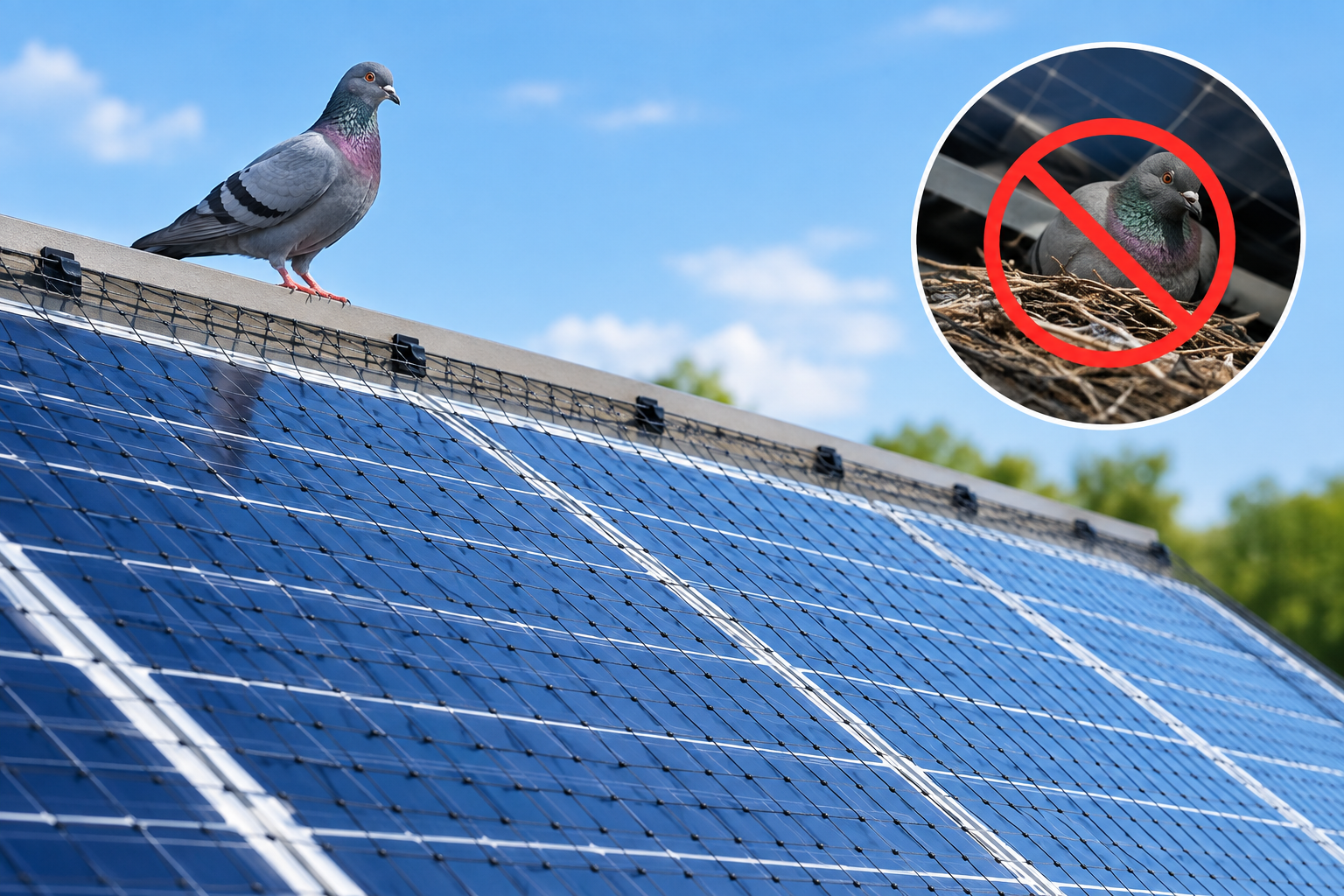
Anti-Pigeon Netting: How It Protects Solar Panels from Nesting Birds
Installing solar panels is a great move for cutting energy bills, until local birds decide your roof is their new favorite resort. That warm, dry gap underneath those panels is basically prime real estate for pigeons looking to settle down.
Without a physical barrier, a couple of nesters will quickly mess up your wiring and drop your system’s efficiency. Installing proper anti-pigeon netting or steel mesh around the edges is the easiest way to block those gaps for good.
Before buying cheap visual deterrents that birds just ignore, it helps to know what actually works. Here is how to protect your setup without damaging your roof or panels.
The True Cost of Ignoring Rooftop Nesters
Allowing birds to claim the space beneath your solar array leads to progressive property damage. A single nesting pair creates an incredible amount of debris within just a few weeks.
Twigs, grass, and feathers quickly block the natural airflow required to cool your solar equipment. Panels need this cross-ventilation to operate at their peak designed electrical output.
When heat builds up underneath, the solar cells face unnecessary thermal stress, which severely drops your energy generation capacity. Furthermore, your roof gutters will inevitably bear the brunt of the overflow.
Heavy rain washes down loose nesting material and accumulated bird droppings directly into the drainage tracks. This mess creates stubborn blockages, causing water to pool and overflow into your home walls, leading to expensive damp repairs.
Why Standard Methods Fail on the Roof
Many homeowners try temporary visual or acoustic scare tactics to clear out pest birds. Plastic owls, shiny reflective ribbons, and ultrasonic sound boxes rarely offer long-term protection against determined pigeons.
Birds are highly adaptable creatures that soon realise these objects pose zero real danger. Spikes are equally ineffective for this specific area, as they cannot seal the perimeter gap completely.
Pigeons will simply walk past loosely spaced spikes or build their nests right on top of them. You need an unbroken, solid physical boundary that physically stops the birds from sliding underneath the panels.
How Anti-Pigeon Netting Restores the Peace
Specialist bird netting for solar panels provides a clean, impenetrable seal around the perimeter of the installation. It acts as a comprehensive barrier that closes off every potential entry point.
This protection completely stops the irritating scratching noises that echo into your bedrooms below at sunrise. It also breaks the cycle of return nesting, meaning younger generations of pigeons will look elsewhere to settle.
Core Benefits of Perimeter Netting
Fitting a proper mesh barrier around your array comes with a handful of huge practical advantages for your home.
- Maintains Ventilation: The open mesh design allows hot air to escape freely from under the panels. Your system keeps its natural cooling properties without losing any generation efficiency.
- Weather Resistance: Modern industrial barriers are fully UV-stabilised to survive intense sunlight, deep frost, and lashing rain without snapping. They do not rot or corrode over years of exposure.
- Humane Exclusion: The system works purely by changing bird behaviour, never causing physical harm. It keeps wildlife safe while preserving your green tech investment.
- Discreet Profile: Once clipped tightly along the sides, the material blends into the dark edges of the array. It protects your system without ruining the clean look of your roof.
- Preserves Component Warranties: Professional setups use non-intrusive clips that grip the underside panel lip. This means no drilling into the aluminium frames, keeping your manufacturer warranty valid.
Preventing Serious Electrical Hazards
Beyond the noise and mess, pigeons pose a hidden threat to the wiring infrastructure. The underside of an array contains complex DC cables, strings, and sensitive electronic connectors.
Nesting birds constantly pull, push, and scratch at these wires while forming their breeding hollows. Over time, this physical movement pulls cables out of their secure mounting clips, leaving them to drag on rough tiles.
Hidden System Vulnerabilities
Leaving pigeons to nest under your solar setup creates some serious hidden risks to your roof’s electrical wiring.
- Exposed Copper Wire: Constant bird friction and pecking wear down the protective plastic insulation. This creates bare wire spots that quickly trigger system-wide inverter faults.
- Arc Fault Risks: Damaged cables can cause electrical arcing, which presents a genuine fire risk on your roof. It is a dangerous situation that is easily avoided with proper barriers.
- Corrosive Droppings: Accumulated bird waste is highly acidic and eats away at protective cable shielding. It causes slow, permanent corrosion to vital metallic connections and framework components.
- Hot Spot Damage: Debris piles create uneven shade across the lower sections of the cells. This forces parts of the panel to overheat, leading to permanent cell burnout.
- Costly Diagnostics: Finding a broken wire hidden right in the middle of an array requires extensive labour. Engineers must lift up multiple panels just to locate the single chewed connection.
Navigating the Legalities of Bird Control
Before booking an installation, you must understand the laws surrounding wildlife protection in the UK. All wild birds, including common urban pigeons, receive protection under the Wildlife and Countryside Act.
This law makes it completely illegal to intentionally disturb, damage, or destroy an active nest containing eggs or young birds. You cannot simply pull down active nests or block birds inside during the main breeding season.
If pigeons are already raising chicks under your roof, the proofing work must wait until the young have fledged naturally. Once the area is clear, installing bird netting for solar panels is entirely legal, safe, and highly recommended.
Professional Cleaning is Part of the Job
You should never try to fit a barrier over existing mess and old nests. Leaving rotting organic material trapped underneath your solar panels defeats the purpose of protecting your home environment.
The entire footprint needs a thorough, deep clear-out using specialised sanitising agents before the physical barrier goes up. This process removes the strong pheromone scents that attract future flocks back to the same spot.
Furthermore, dried pigeon droppings create dangerous airborne dust containing harmful spores. Handling this cleanup requires professional respiratory safety gear and high-pressure washing equipment to clear out gutters safely.
Choosing Between Mesh and Netting Options
People tend to use “netting” and “mesh” like they’re the same thing, but they really aren’t. Flexible nylon netting works fine if you’re trying to cover a massive commercial space or an open balcony. But for standard house roofs, rigid steel wire mesh is what you actually want—it gives a much tighter, solid seal around the edges of your panels.
We stick with high-grade stainless steel mesh at PPSP Ltd because it actually lasts. Soft netting might stop a pigeon, but squirrels and rats will chew straight through it. A proper steel mesh keeps all the vermin out while still letting plenty of air flow underneath so your panels don’t overheat.
Every roof is a bit different, so we check the tile shape, pitch, and height before fitting anything to make sure there aren’t any gaps left behind. We also clear out all the old nests and clean up the mess first, leaving you with a setup that actually looks neat and keeps working.
Summary: A Shield for Your Clean Energy
Protecting your home with anti-pigeon netting is a smart, preventive step that safeguards your financial investment. It removes the stress of continuous roof cleaning and structural repairs.
Leaving your panels exposed to nesting birds ruins efficiency and creates severe fire and health hazards. A professional physical barrier keeps your home safe and quiet while your solar system works perfectly.
FAQ
How much does it cost to install anti-pigeon netting with PPSP Ltd?
The total investment for solar proofing depends heavily on your system size and roof accessibility. Most domestic properties fall between £300 and £1,000 for a professional service. This price includes a full debris clear-out, gutter decontamination, and fitting premium, long-lasting physical barriers.
Can I install bird netting for solar panels as a DIY project?
You can buy cheap kits online, but getting up on a steep roof with rolls of mesh isn’t worth the risk. Without proper scaffolding or safety gear, it’s a fall waiting to happen. Plus, if you drill into the frames or fit it wrong, you’ll void your panel warranty. We use special clips that grip the edges without damaging the setup.
Will installing a bird barrier affect my solar energy production?
No, a properly fitted perimeter barrier will actually help maintain or improve your daily power output. By stopping birds from leaving thick droppings and nesting debris on the glass, sunlight hits the cells cleanly. The open design also ensures crucial cooling ventilation.
How long do these physical bird barriers last on a rooftop?
A proper stainless steel or galvanised mesh will easily outlast the weather. It won’t rust, snap in freezing temperatures, or warp when the sun beats down on it. We put a 12-year guarantee on our installations because once it’s up, it isn’t going anywhere.
What happens if birds are already nesting under my panels right now?
If there are eggs or live chicks under there, UK wildlife law says we can’t touch them until they’ve left the nest. Once the young birds fledge and fly off, we can get up there, clear out all the old muck, sanitise the area, and seal it up so they can’t come back.
<- Back to blog