

What Is Solar Panel Bird Proofing and Does It Really Keep Birds Away?
If you have solar panels on your roof, you usually notice the birds before you notice the damage.
It starts small. A bit of scratching overhead. Movement early in the morning. That constant fluttering sound that seems harmless at first. Then one day, you look up and realise birds are not just passing through. They are living under the panels.
That is where solar panel bird proofing stops being optional and starts making sense.
A lot of homeowners assume birds will move on once the weather changes. Typically, they don’t. They keep returning once they locate that safe opening beneath the solar panels because it provides them with all they need—shelter, warmth, and a secure location to construct nests.
After that, the issue becomes more significant than just noise.

Why Birds Go Under Solar Panels
Birds find the area beneath a solar panel to be nearly ideal, even though it appears little to us. When it rains, it remains dry. It blocks wind. They are protected from predators by it. It even retains heat from the roof’s surface on chilly mornings.
So from their side, it is a solid place to settle.
The trouble is what follows after they settle. Birds do not just sit there quietly. They bring nesting material, feathers, dirt, and droppings. That buildup spreads fast, especially if pigeons are involved.
You usually start seeing signs like this:
- Debris is collecting around the panel edges
- Gutters are filling with feathers and nesting material
- Bird droppings running down the roof tiles
- Constant noise during early morning hours
- Birds returning to the same area every day
What looks minor at first often turns into something you cannot ignore.
What Solar Panel Bird Proofing Actually Means
A proper solar panel bird-proofing system is not about scaring birds for a few days. It is about removing the access point that makes your roof attractive in the first place.
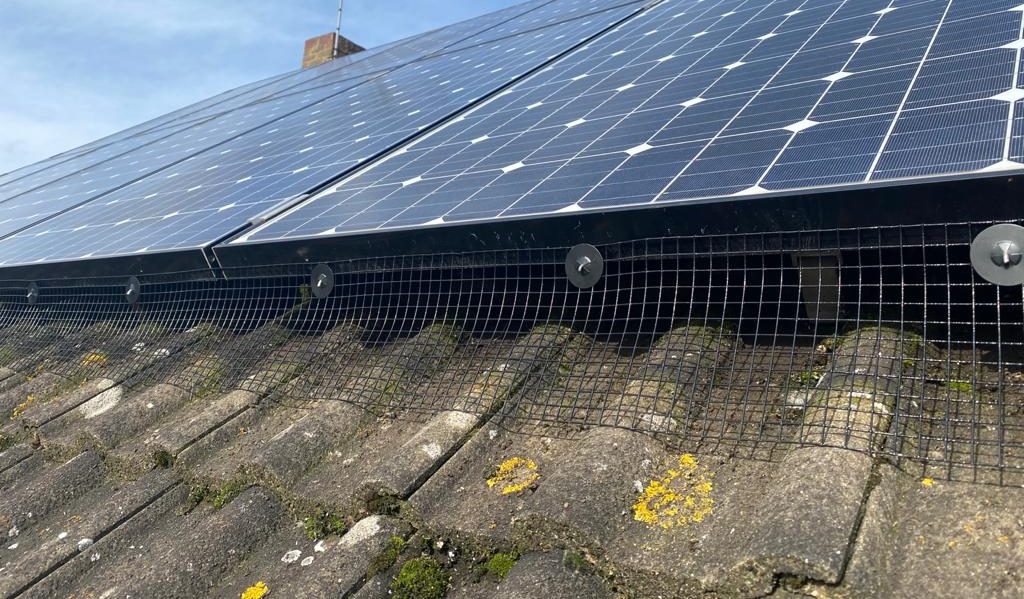
The most common method uses steel mesh fitted around the outer edge of the panels. That mesh blocks the gap underneath while still allowing air to move freely through the system.
That airflow matters because solar panels need ventilation to work properly.
The idea is simple. Close the opening, keep the panels breathing, and stop birds from getting underneath without affecting the system itself.
This is why many homeowners install a Solar panel bird guard instead of trying quick fixes. Temporary barriers often shift, peel away, or fail after the first bad stretch of weather.
A proper guard is built to stay put.
Does Bird Proofing Really Keep Birds Away?
Yes, when it is done properly, it works because birds lose the reason they came there in the first place.
Birds do not gather under panels because they love solar equipment. They gather because there is shelter. Remove that shelter, and most of them stop returning.
That is why Solar panel bird netting has become one of the most reliable long-term options. It creates a physical barrier that birds cannot work around easily.
But the detail people miss is coverage.
If one side is loose, if one corner stays open, birds usually find it. They are persistent like that.
A proper install does not leave guesswork.
What About Netting and Spikes?
Different products do different jobs, and this is where people often buy the wrong thing.
Anti-bird netting for solar panels is made to seal the perimeter around the panels themselves. It blocks entry without harming birds and without changing how the roof performs.
That handles the main issue.
Then you have bird prevention spikes, which work differently. Spikes stop birds from sitting on ledges, ridges, and nearby roof edges where they like to land before moving underneath the panels.
The best results often come when both are used together:
- Netting blocks access under the panels
- Spikes reduce landing spots nearby
- Both together lower the repeat activity around the roof
Spikes alone usually do not solve the problem because they do not remove the shelter.
They only interrupt part of the behaviour.
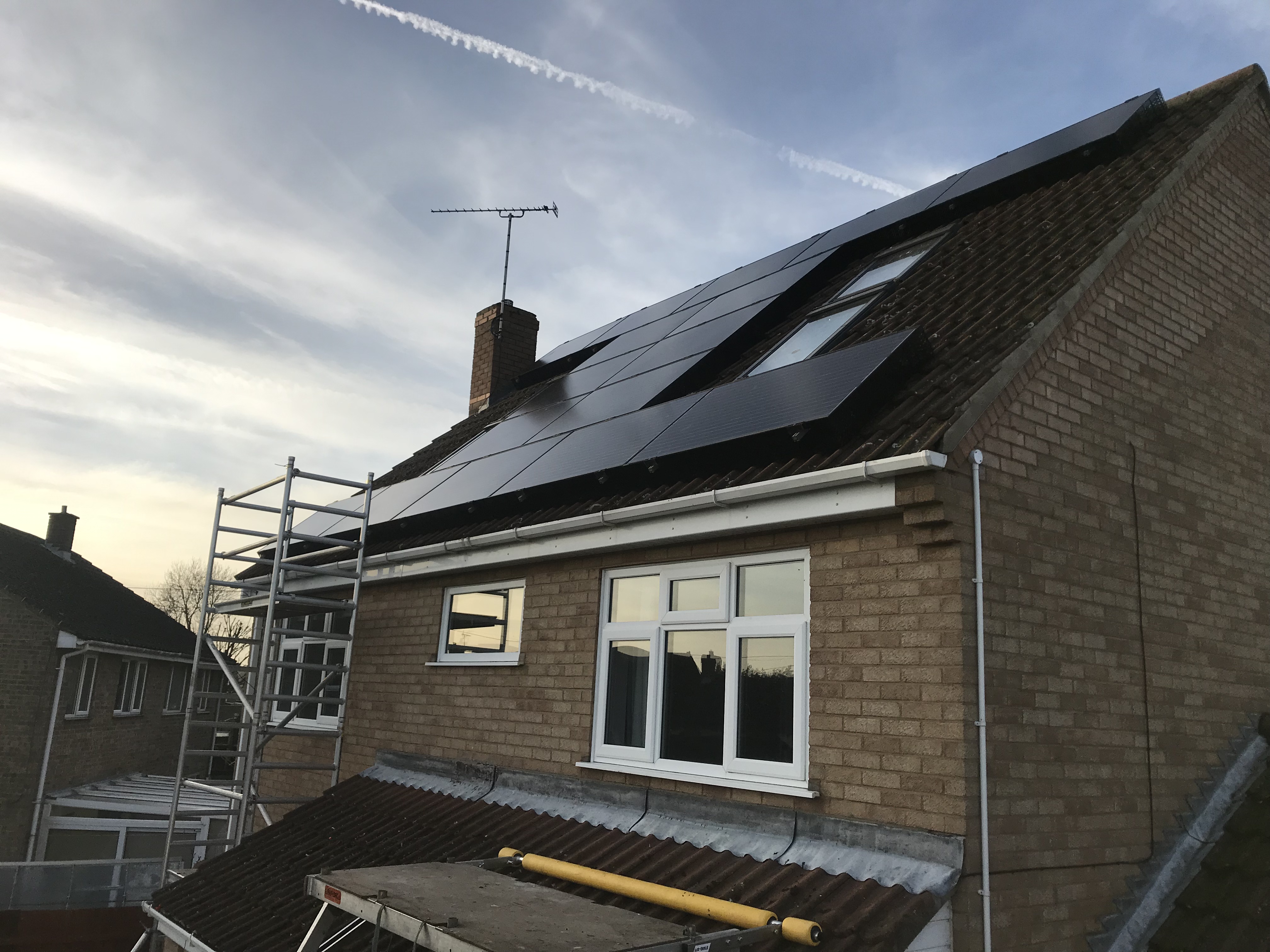
Why Cheap Deterrents Usually Fail
This is where many people waste time first.
They start with reflective strips, plastic owls, hanging discs, noise devices, and all kinds of random bird deterrent products that promise an easy fix.
Some help for a little while.
Then birds get used to them.
Pigeons especially learn fast. Once they know there is shelter under your solar array, they stop caring about visual tricks. The shiny object that worked on day one becomes background noise by week two.
That is why physical proofing wins. It does not rely on birds being afraid. It simply removes access.
And birds cannot ignore a blocked entrance.
The Cost of Doing Nothing
The longer birds stay under solar panels, the more expensive the cleanup usually becomes.
Bird droppings are not just ugly. They are acidic. Over time, they stain roof surfaces and wear materials down. Nesting debris builds up around drainage points and starts affecting gutters.
Then airflow under the panels gets restricted, which is not great for system efficiency.
In some cases, wiring also becomes vulnerable because birds peck, shift material around, and create constant movement under the array.
At that point, the problem is no longer just about birds. It becomes a maintenance issue.
Timing Matters More Than Most People Think
The best time for repelling birds from solar panels is when you first notice regular activity, not after months of nesting.
Not after the mess spreads across half the roof.
Once birds settle in, removal becomes slower because the area has to be cleaned before protection goes in.
That means more labour and more disruption than a simple early install.
Act early, and the whole process stays straightforward.
What a Proper Installation Should Look Like
A proper system should sit neatly around the panel edges, stay firm in bad weather, and avoid drilling directly into the solar frame.
That part matters because poor installation can create bigger problems than the birds themselves.
A specialist like PPSP Ltd uses systems designed specifically for solar panel setups, not general roof materials pushed into place.
That difference matters because solar equipment needs protection without pressure, damage, or loose fittings that fail later.
Final Thought
Birds are stubborn. Once they find a safe spot, they treat it like home.
That is why solar panel bird proofing works when it is done properly. It solves the real reason birds stay there instead of trying to scare them for a few days.
If birds are already circling your roof, scratching overhead, or nesting under the panels, the issue usually does not fix itself.
PPSP Ltd helps homeowners stop it before it turns into roof damage, clogged gutters, and lower solar performance.
A small fix now usually saves you from dealing with a much bigger mess later.
FAQ
Why Is Solar Panel Bird Proofing Important?
Because once birds settle under solar panels, they rarely leave on their own. What starts as a little noise can turn into nests, droppings, blocked gutters, and a constant mess around the roof. Bird proofing shuts that space off early, before a small nuisance becomes something expensive.
Does Bird Proofing Actually Stop Birds From Coming Back?
Yes, if the access is properly sealed. Birds return because they know there is shelter underneath. Once that gap is covered with mesh or guards, the reason they kept coming back disappears. They usually move on because the space no longer works for nesting.
What Is Better for Solar Panels, Mesh or Spikes?
They do different jobs. Mesh blocks the space under the panels, which solves the main problem. Spikes only stop birds from landing nearby. That is why mesh usually does the heavy lifting, while spikes help reduce activity around the area.
How Do You Know Birds Are Already Nesting Under Solar Panels?
You usually hear it before you see it. Scratching sounds, fluttering early in the morning, feathers near the roof edge, or droppings below the panels are common signs. If birds keep returning to the same spot, they have likely already claimed it.
<- Back to blog